Qualcomm spins 1.3GHz Snapdragon
June 1, 2009Qualcomm has announced a new 45-nm fabricated entry in its “Snapdragon” family of chipsets, targeting smartphones and a newly announced category of small-scale netbooks called “smartbooks.” The QSD8650A includes an ARM-based, 1.3GHz applications processor, 2D/3D graphics accelerators, and “up to 30 percent lower” power consumption, the company says. (more…)
 Several companies will announce low-power netbooks this week incorporating Qualcomm's ARM-based, Linux-compatible Snapdragon processor, which is being upgraded to a 45nm, 1.3GHz “QSD8650A” version.
  The final installment of Simtec's series on embedded Linux system development discusses issues involved with deploying embedded projects, such as the example ARM-based web kiosk system.
 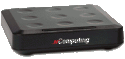 [Updated: 3:30] — NComputing has joined a United Nations program to bring 1,000 Linux-based NComputing desktops to schools in developing countries. NComputing also announced that several electric utilities in the U.S.
  A U.K. startup called Interead will soon ship a Linux-based e-book reader claimed to be about 40 percent lighter than an Amazon Kindle 2, and over $100 cheaper. The “Cool-er” is equipped with a 400MHz ARM9 Samsung processor and a six-inch E-Ink Vizplex display.
  Verizon Wireless announced it will sell the Palm Pre smartphone in about six months, while AT&T has left the door open to the possibility, says Reuters. Meanwhile, Palm has confirmed new features of the Pre, including the ability to sync seamlessly with iTunes, says eWEEK.
 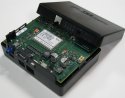 TES Electronic Solutions announced an automotive telematics reference design supporting advanced location-based services. The “Titan” platform is offered either as a thin client running Linux or Windows CE, or as a low cost M2M platform, and incorporates GPS, GSM/GPRS, and configurable I/O, says the company.
 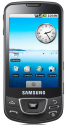 At the Google I/O Developer Conference yesterday, the company announced that it expects at least 18 Android phones to ship in 2009, according to an industry report. Google also announced that it will launch part two of its Android Developer Challenge contest in early August.
 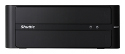 Shuttle has released a fanless mini-PC using Via's 1.0GHz Nano U1700 processor. The Shuttle XS29F is said to feature both VGA and DVI video outputs, up to 4GB of RAM, SATA 2 storage options, four USB ports, and total power consumption of less than 50 Watts.
 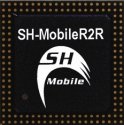 Renesas Technology has announced a new Linux-ready system-on-chip (SoC) targeting terrestrial digital broadcast capability in security cameras, car navigation systems, and personal navigation devices (PNDs).
 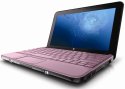 HP has upgraded its “Mini” netbooks, which come with HP's own Ubuntu-based “Mi” Linux distro. The “HP Mini 110 with Mi” improves on the Mini 1000 with a larger, faster hard drive, a VGA port, a third USB port and a lower $280 price, says HP.
 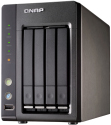 Qnap Systems announced a 2.5-inch drive variation on its Linux- and Intel Atom-based network-attached storage (NAS) devices, called the SS-439 Pro Turbo NAS. In other NAS news, Asus is readying an Eee-branded NAS device, similarly running Linux on an Atom, says an industry report.
 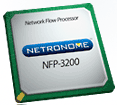 Netronome announced new multi-core “network flow processors” that are backward-compatible with Intel's IXP28xx, but claimed to offer over twice the MIPS. The Linux-compatible NFP-32xx system-on-chips scale from 16 to 40 cores, offer 20Gbps throughput, and provide a programmable dataplane, virtualization, and security…
 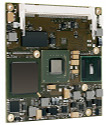 Kontron is sampling a single board computer (SBC) using the 95 x 95mm microETXexpress format and an Intel Atom N270 processor. The “microETXexpress-DC” features a special “S5 Eco” power-off state, gigabit Ethernet, PCI and PCI Express expansion, plus optional SSD (solid state disk) storage, says Kontron.