Modular open source phone runs OMAP3x SoC
May 20, 2009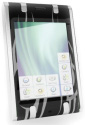 Open source hacker community GizmoForYou is shipping a Linux hardware/software kit for building a modular touchcreen smartphone. Based on the OMAP35x-based Gumstix Overo Earth single-board computer (SBC), the Flow phone offers modules including GPS, 3.5G cellular, Bluetooth, WiFi, and a camera, says the group. (more…)
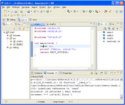 CodeSourcery has updated its commercially supported GNU- and Eclipse-based software development toolkits with compiler optimizations and other enhancements. The Spring release of Sourcery G++ also offers a QEMU emulator and updated runtime library routines, as well as new IDE debugging support, says the company.
 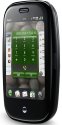 Palm says its Linux-based Palm Pre smartphone will debut on the Sprint 3G network on June 6, priced at an iPhone-like $200, says eWEEK. However, the Pre is going to require substantial developer support before it beats the iPhone, eWEEK quotes a Gartner analyst as saying.
 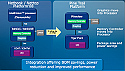 Intel has provided a few details of its next-generation Atom platform for netbooks, code-named “Pine Trail.” The new platform shrinks the number of chips required to develop a device down to two, the CPU package called “Pineview” and the I/O controller called “Tiger Point,” reports say.
  [Updated: 2:30PM] — Moblin.org has released the beta version of its open-source Linux “Moblin v2.0 for Netbooks and Nettops” stack. The Moblin beta shows extensive upgrades in the user interface (UI), including a new toolbar (pictured), and an “m_zone” home page that aggregates social networking content.
 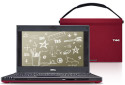 Dell is readying a netbook for the K-12 educational market with a rubberized case and an optional touchscreen. Incorporating an Intel Atom N270 with 1GB RAM, the Latitude 2100 offers a 10.1-inch display, WiFi, gigabit Ethernet, up to 250GB storage, and Ubuntu Linux, says Dell.
  Part Five of Simtec's series on embedded Linux system development examines end-of-project strategies for the example ARM-based web kiosk system, and then walks users through buildroot development.
 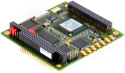 [Updated: May 20] — Advanced Micro Peripherals announced a PC/104-Plus-format multi-channel video controller board with a Linux-compatible SDK. The VAC2000 PC/104-Plus offers annotation and overlay functions, and can blend images from its dual analog NTSC/PAL channels, mixing real-time video with graphics and text, says…
 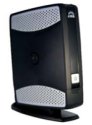 Igel Technology announced a $186 thin client for small and home office (SOHO) businesses and “unmanaged” environments. The Igel One runs Linux on a Via Eden processor clocked at 400MHz, with 512MB RAM, 1GB flash, and Ethernet and USB connectivity, says the company.
 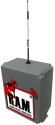 Machine-to-machine (M2M) communications vendor Sixnet is shipping a cellular-enabled remote monitoring and control device that runs Linux. The PowerPC-based R.A.M. (Remote Access and Monitoring) device enables remote monitoring of data logging and SCADA operations via secure cellular networks, says the company.
 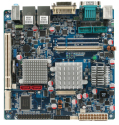 Avalue announced a Mini-ITX-format motherboard for signage and kiosk applications that offers dual-channel 24-bit LVDS for simultaneous displays. The EMX-945GSE incorporates an Intel Atom N270 and 945GSE chipset with up to 2GB RAM, and provides two gigabit Ethernet and six USB 2.0 ports, says Avalue.
 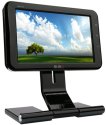 Linux users should soon be able to use USB-connected monitors that incorporate DisplayLink's chips. DisplayLink has released Linux versions of its USB monitor source code under LGPL, and has partnered with Novell and the Linux Driver Project to develop drivers for desktops and mobile devices.