Access confirms NTT DoCoMo win
April 21, 2008Access says work has begun adapting its Linux-based mobile phone stack to work with Japanese mobile phone marketshare leader NTT DoCoMo's 3G network. DoCoMo will begin distributing 3G FOMA phones based on Access Linux Platform (ALP) and an operator-specific pack in the second half of 2009, Access said. (more…)
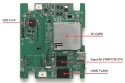 Fabless audio chipmaker SigmaTel is shipping a highly integrated system-on-chip (SoC) for personal navigation devices (PNDs). Available with a Linux BSP and support from Embedded Alley, the ARM9-based STMP3738 reduces BOM costs 15 percent, and will ship in finished products by July, the companies said.
 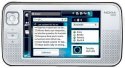 A Nokia-sponsored project is porting Ubuntu Linux to the ARM architecture. The “Handheld Mojo” team has completed ARM builds of Feisty Fawn (dubbed “Frisky Firedrake”) and Gutsy Gibbon (“Grumpy Griffin”), with Hardy Heron compilation starting soon.
  The maintainer of Linux 2.6 has called for a full-time, architecture-independent “embedded maintainer.” Speaking at a CELF's fourth annual Embedded Linux Conference, Morton also told embedded developers how to select a kernel, get support from the kernel community, and decide whether to submit code to mainline.
 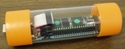 Like to build software for ARM-based development targets on the go? Tin Can Tools is readying a tiny, “unbrickable” Linux USB Gadget software development kit that can also be used as a sturdy, USB bus-powered development target for general ARM device prototyping, application testing, and experimentation.
 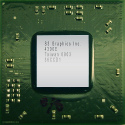 Chipmaker Via's S3 Graphics division has announced a high-performance discrete graphics processor positioned as the first to meet the embedded industry's thermal requirements. The 4300E targets gaming and signage, offers HD video, DVI or HDMI output, and mixes dedicated and shared video memory.
  The Linux community has released a new kernel that could have a major impact on personal computing, writes Henry Kingman on Linux-Watch. Release 2.6.25's support for the ARM-based Marvell Orion architecture could improve ARM's ability to fend off competition from x86, he suggests.
 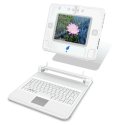 [Updated at 3:40] — A British Columbia-based startup called InkMedia announced an under-$300 notebook that runs embedded Linux. Based on a Via chip, the Ink Mobile Computer (Ink MC) depends on flash-based storage and offers an 8.6-inch SVGA display, four USB slots, Ethernet, and WiFi.
  A non-profit open source project with high-profile backers has released beta code for an open source Flash media player, with a media server in the wings. Open Media Now's Gnash player runs standalone or as a plugin, and may run better than Flash on constrained devices.
 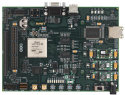 Xilinx unveiled version 10.1 of its Embedded Development Kit (EDK) in support of its new high-end Virtex-5 FXT field-programmable gate array (FPGA). Meanwhile, software vendors supporting the EDK and the dual-core PowerPC-based FPGA include MontaVista, Wind River, LynuxWorks, Timesys, Avnet, Green Hills Software, and Lauterbach.
 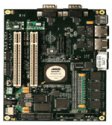 Timesys has joined up with information services company TechInsights to announce an online service for Linux developers wishing to benchmark their software on specific hardware targets. BenchLab.com combines the TechInsights VirtuaLab online lab environment with the Timesys DIY LinuxLink development environment.
 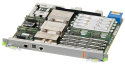 Wind River announced that it will port its Carrier Grade Linux (CGL) and Workbench development suite to Sun's multicore UltraSPARC T2. Wind River Platform for Network Equipment, Linux Edition, will be the first carrier-grade Linux implementation for Sun's chip multithreading (CMT) processors, says Wind River.
  Sigma Designs has introduced a pair of set-top box SoCs that run Linux. Powered by three MIPS cores apiece, the SMP8654 and SMP8655 boast accelerated graphics and compliance with HDMI (high-defintion multimedia interface) 1.3, says Sigma.