Taiwanese IPC vendor snaps up PC/104 originator
March 20, 2008[Updated 3:45] — A Taiwanese industrial PC vendor plans to acquire one of the oldest U.S. embedded board and system vendors. Adlink Technology of Taipei will pay $20 million for all outstanding common shares of Ampro Computer, a privately held 25-year-old company known for originating the PC/104 and PC/104-Plus standards. (more…)
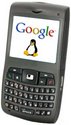 IBM's DeveloperWorks has published a tutorial on using the Eclipse-based developer tools for Google's Android mobile phone platform to work with XML. Frank Abelson's latest exploration of Linux-based Android platform shows how to use XML to build a mobile RSS reader.
 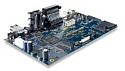 NXP has announced an STB (set-top box) development kit that runs Linux and supports SD (standard definition) television. The STB222 has a MIPS32 CPU core, decodes MPEG-4 AVC/H.264 video, reduces MPEG artifacts, and can decode two video streams at once, according to the company.
  Peder Ulander, who served as MontaVista's VP of marketing between 2004 and 2006, has been named VP of product strategy at Pure Networks. In his new position, Ulander will help the Seattle-based wireless home network management software firm expand its broadband strategy.
 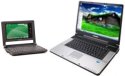 This hands-on review compares and contrasts two computing appliances that run Linux on Via C7-M processors. The Zonbu Zonbook and the gOS Cloudbook are both manufactured by Everex, and cost about the same up-front, but that's where the resemblance ends, our reviewer found.
 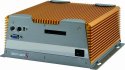 Aaeon has introduced a fanless, Linux-compatible computer that runs Intel Celeron CPUs. The Boxer AEC-6905 is designed for vehicle mounting, has PCI and PC/104-Plus expansion, CompactFlash storage, and operates on DC power from 9-30 volts, Aaeon says.
  A British startup called AlertMe.com has introduced a remotely managed security system that runs off a Linux-driven Hub. The AlertMe Hub tracks various sensors via Zigbee, and then reports back to AlertMe.com's servers, which in turn relay alarm events to the customer via SMS or email.
 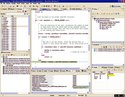 The Eclipse Foundation awarded its EclipseCon 2008 Technology Awards yesterday, and named Wind River Workbench (pictured at left) as the “Best Commercial Eclipse-Based Developer Tool.” Other award winners included EclEmma, Cyrano, Xmind 2008, and MyTourbook.
  A small start-up based in Seattle has started selling a “self-support” tool for developers working with Java and/or Linux. SourceLabs says its “Self-Support Suite” can quickly identify problems and locate solutions for users of Hibernate, Spring, Struts, Axis, and Tomcat, as well as select Linux applications.