VoIP phone base station taps uCLinux
January 30, 2008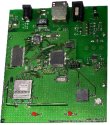 A Portuguese wireless equipment manufacturer has developed a uCLinux-based DECT phone basestation reference design. Bithium – Sistemas de Telecomunicacoes's Freedom design supports dual PSTN/VoIP cordless phones. (more…)
 Start-up Azingo, formerly Celunite, will officially launch its Linux-based mobile phone software stack next month. Set to debut at the Mobile World Congress in Barcelona, the “Azingo Mobile” stack is positioned as a comprehensive software/services offering for mid-tier feature-phones compliant with LiMo…
 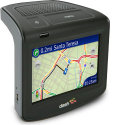 Advances in GPS chipset development will allow integration of GPS in every mobile device within five years, claims a newly released report. Lower prices, GPS modernization, and new Global Navigation Satellite Systems (GNSS) will expand the market to 900 million units by 2013, ABI Research forecasts.
 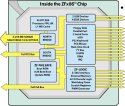 Fabless chipmaker ZF Micro Solutions has signed up Chip 1 Exchange USA to distribute its Linux-compatible ZFx86 system-on-chip (SoC). The venerable, 486-based ZFx86 runs on less than 1 Watt, and is touted as the lowest power x86 embedded controller available.
 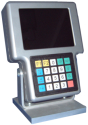 German industrial computer manufacturer Solcon Systemtechnik has released a highly customizable industrial terminal PC that runs embedded Linux. The touchscreen-equipped Unidat 6.5-inch Terminal offers options including IP67 protection against dust and water, and resistance to temperatures ranging from -22 to…
 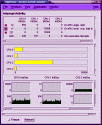 Real-time multi-core x86 Linux specialist Concurrent has ported its development tool suite to Ubuntu development hosts. NightStar LX for Ubuntu comprises a suite of graphical development and debugging tools aimed at multi-processor, multi-threaded, real-time application and…
 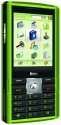 Red Bend Software will demonstrate a concept phone supporting partial, differential firmware updates over-the-air. Based on Trolltech's open Linux-based Greenphone, together with Red Bend's vRapid Mobile FOTA (firmware over-the-air) stack, the “Mast” phone will be shown at the Mobile World Congress…
 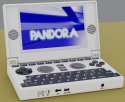 [Updated Mar. 3, 2008] A stealth-mode startup is readying a Linux-based handheld gaming device with WiFi, USB, and a 4.3-inch 800×480 touchscreen. The “Pandora,” headquartered at OpenPandora.org for now, runs Linux on a next-generation ARM SoC with integrated OpenGL 2.0 compliant graphics processor.
 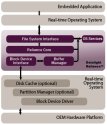 Flash filesystem and management software specialist Datalight has ported its commercial flash filesystem to Linux. The Bothell, Wash. firm claims that Datalight Flash File System for Linux offers 400 percent faster write performance and five times faster mount speeds than JFFS2.
 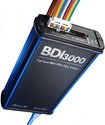 Swiss hardware tools vendor Abatron has started shipping a new Linux-compatible hardware debug probe. Compared to the company's older BDI2000, the new BDI3000 offers a faster 10/100 Ethernet interface, support for lower target voltages, and faster flash programming speeds up to 1.5Mbps, Abatron claims.
 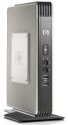 Hewlett-Packard unveiled its first new thin clients since acquiring Neoware last fall. Among the new products is a Debian- based “t5735” model featuring a CPU and GPU (graphics processor unit) from AMD, which acquired GPU specialist ATI recently.
 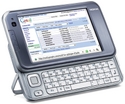 Finnish handset manufacturer Nokia is acquiring Norwegian phone-stack vendor Trolltech in a deal worth about $150 million USD. Expected to close in the second quarter, the acquisition increases the likelihood that Nokia will move beyond its Symbian operating system (OS) toward using Linux in its phones.
 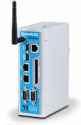 VSCom introduced a RISC-based industrial embedded computer that runs Linux. The ARM9-based OpenRISC Alekto comes with Debian Linux, can withstand temperatures from 14 to 149 degrees Fahrenheit, and provides interfaces including Ethernet, USB, I2C, serial, and digital I/O for hooking up industrial devices.
 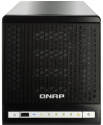 Qnap Systems introduced a four-bay version of its Linux-based line of multifunction NAS (network-attached storage) devices. The TS-409 Pro Turbo NAS offers a hot-swappable HDD design, RAID 0/ 1/ 5/ 6/ 5+ support, and online RAID capacity expansion and level migration, says Qnap.